
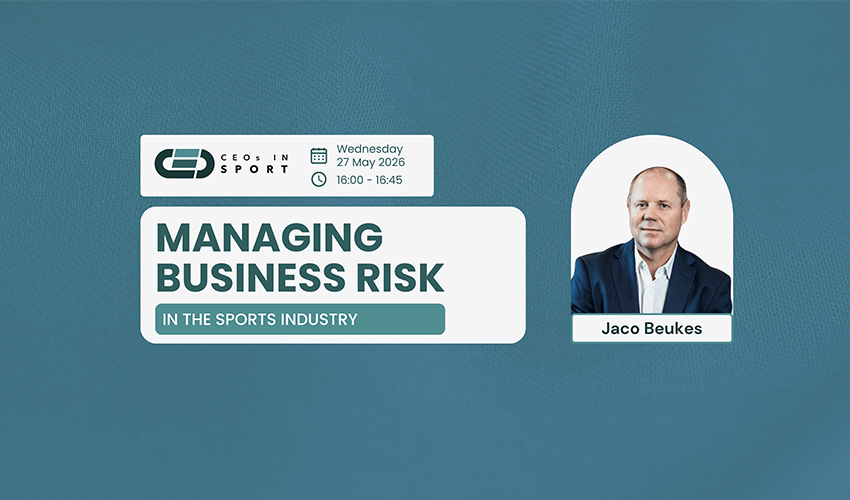
The sports industry operates in an environment defined by opportunity, visibility, and increasing complexity.
Commercial growth, evolving stakeholder expectations, technological advancement, and heightened scrutiny have created a landscape where uncertainty is constant.
In this environment, risk management is no longer a compliance function. It is a core leadership responsibility.
Risk as Part of Growth
In sport, risk and opportunity are structurally linked. Every strategic decision carries inherent exposure, whether in commercial expansion, event hosting, infrastructure investment, or partnership development.
The challenge is not to eliminate risk, but to ensure it is understood and integrated into decision-making.
Organisations that embed risk thinking into strategy are better positioned to pursue opportunity with confidence.
Reputation as a Strategic Asset
Sport operates under intense public visibility. As a result, reputation becomes one of the most important strategic assets an organisation holds.
Stakeholders including fans, sponsors, athletes, and governing bodies all contribute to how an organisation is perceived.
While financial performance can recover from setbacks, reputational damage tends to compound. This elevates the importance of governance, transparency, and accountability beyond procedural compliance.
Culture of Preparedness
Effective risk management is less about documentation and more about culture.
Organisations that perform well under uncertainty tend to share common behaviours: early identification of issues, open escalation of concerns, and proactive engagement with potential risks.
Preparedness is what enables responsiveness when conditions shift.
Risk as a Leadership Lens
In modern sport, risk is not a separate domain of management. It is a lens through which leadership decisions are made.
The defining difference between resilient and exposed organisations is not the absence of risk, but the clarity with which it is understood, communicated, and acted upon.